
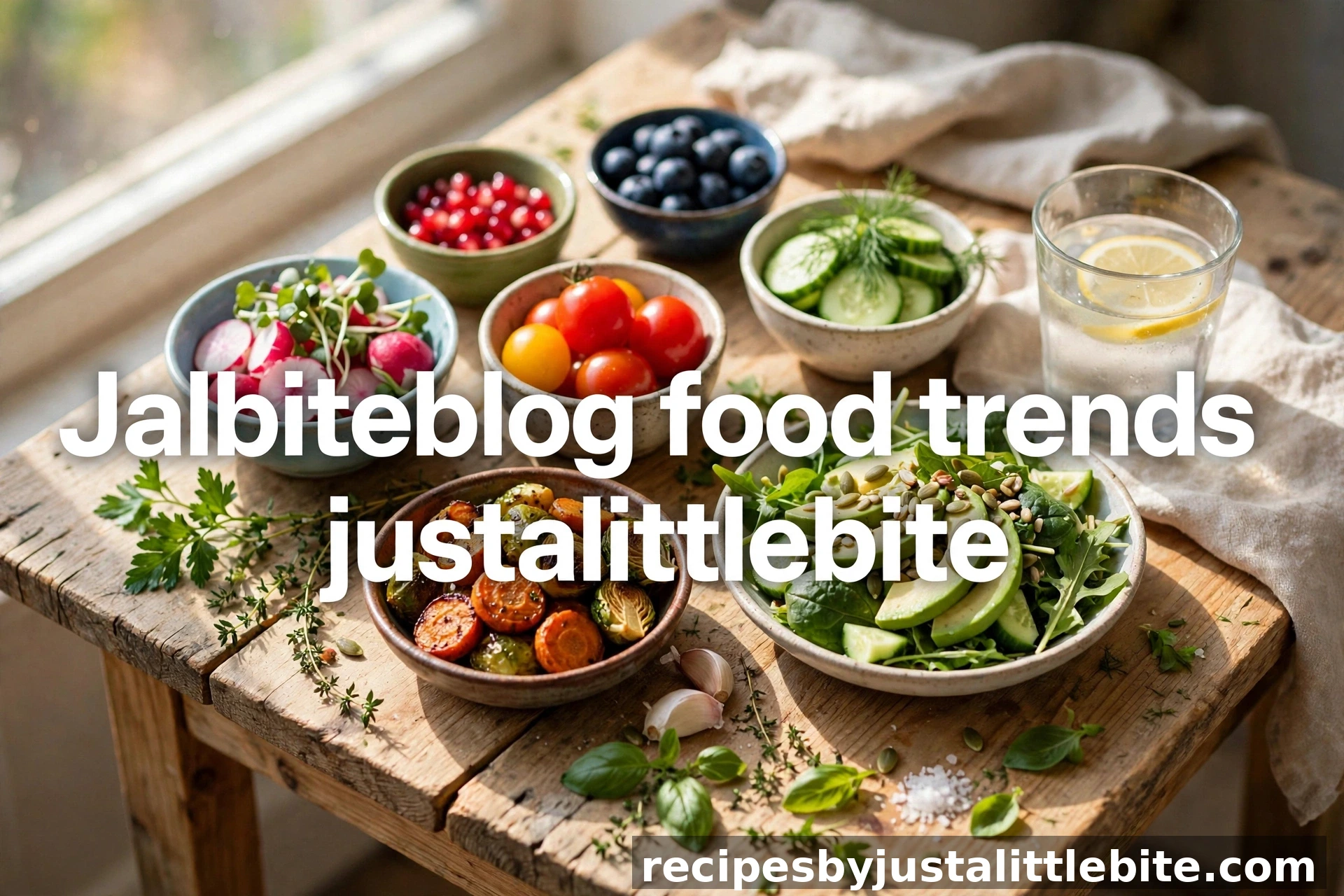
Food trends move fast. One week everyone talks about a new way to cook vegetables, the next week a different flavour or cooking method takes its place. This guide to jalbiteblog food trends justalittlebite makes it easier. It explains the trends that matter now, how to try them at home without wasting food or money, and how to tell a useful idea from a short-lived fad.
Here, from justalittlebite food trends jalbiteblog, are ideas for home cooks. You do not need special equipment or rare ingredients, only a little curiosity. When a food jalbiteblog trend justalittlebite readers enjoy is built around simple cooking, it fits easily into a normal week.
What jalbiteblog food trends justalittlebite covers
At its heart, jalbiteblog food trends justalittlebite is about watching how people cook and eat, then turning the most useful ideas into recipes and guides that work in a real kitchen. A trend can be an ingredient, such as a grain, a bean or a seasonal vegetable; a method, such as air frying, slow cooking or one-pan meals; or a way of eating, such as smaller portions or more plant-based meals.
A good trend solves a real problem: it saves time, reduces waste, or helps you use what is already in the fridge. The jalbiteblog food trend from justalittlebite focuses on that practical side, asking one question: will this help you cook better food at home this week?
Five food trends worth watching
These trends were chosen because they are practical, flexible and easy to adapt to different tastes, budgets and household sizes. Try one at a time, and keep the ones that suit your kitchen.
Small portions and mindful eating
Many people find that a modest plate, eaten slowly, is more satisfying than a large plate eaten in a rush. Small portions also make it easier to try new foods, because you can taste something different without building a whole meal around it. Start with a slightly smaller main portion and add a salad, a soup or a simple vegetable side.
Quick weeknight cooking
Busy evenings are a big reason people stop cooking at home. The answer is often not a complicated new recipe, but a shorter one, using fewer steps, fewer pans and fast-cooking ingredients such as eggs, canned beans, frozen vegetables, pasta and rice. Keep a short list of meals you can make in 20 to 30 minutes, with ingredients for two or three of them on hand.
Plant-forward plates
Plant-forward cooking does not mean giving up meat or dairy. It means putting vegetables, beans, lentils, grains, nuts and fruit at the centre of the plate more often. Try a lentil soup, a chickpea salad, a vegetable curry, or roasted vegetables with rice and a simple sauce, with herbs, lemon, garlic or a mild spice for flavour.
Global flavours at home
More home cooks are borrowing flavours from other food cultures in a simple way, such as soy sauce, ginger and sesame in a stir-fry, or cumin and coriander on roasted vegetables. Start with one new spice, sauce or cooking method, learn how much to use and which foods it suits, then try a second one.
Homemade drinks and simple snacks
Another trend is a return to simple homemade drinks and snacks. Instead of buying a sweet drink or a packaged snack every day, more people are making flavoured water, a light iced tea, a fruit smoothie or a small homemade snack at home. These are often cheaper, and you can control how sweet or salty they are.
How to try a new food trend without wasting food or money
Trying a trend should feel like an experiment, not a gamble.
- Start small. Cook the new dish once, in a small amount, before you make it for guests.
- Use what you have. Look in your fridge and cupboards first. Many trends can be tried with an ingredient you already own.
- Buy one new item at a time. If a recipe calls for three new ingredients, try the one that matters most first.
- Keep a note. Write down what worked, what you would change, and whether your household liked it.
A trend that fits your kitchen will usually feel easy by the second or third try. If it still feels like hard work, it may not be the right trend for you right now. When testing new dishes and storing leftovers, follow basic food safety guidance, such as the advice at FoodSafety.gov.
How to spot a trend that will last
Not every popular idea deserves a place in your weekly cooking. A lasting trend usually has a few clear signs, as shown below.
| Sign | What it looks like | Why it matters |
|---|---|---|
| It saves time | Fewer steps and faster prep | You are more likely to repeat it |
| It uses common ingredients | Pantry staples and seasonal produce | It stays affordable and easy to find |
| It is flexible | Works with different vegetables or grains | You can adapt it to what you have |
A short-lived fad often needs a rare ingredient, a special gadget or a complicated method, and is hard to repeat on a normal evening. In practice, the jalbiteblog food trends by justalittlebite follow this simple test: if an idea is practical, flexible and tasty, it is worth sharing.
A simple weekly plan for trying trends
You do not need to change your whole diet to explore new food trends. Choose one trend, plan one small meal around it, and keep the rest of your week familiar. Try it on Tuesday, cook a familiar favourite on Wednesday, and use leftovers in a new way on Thursday. Over a month, you will have tried four ideas, and you will know which ones deserve a regular place in your kitchen.
Related guides
If you enjoyed this guide to jalbiteblog food trends justalittlebite, these related guides can help you put the ideas into practice:
- food recipes justalittlebite
- jalbitesnacks best snacks justalittlebite
- jalbitehealth guide by justalittlebite
- quick recipes jalbiteworldfood
- healthy food justalittlebite
Frequently asked questions
What is jalbiteblog food trends justalittlebite?
It is a guide to current food trends, written for home cooks. It explains which ideas are practical, how to try them in a small way, and how to fit them into everyday meals without wasting food or money.
How often do food trends change?
Some change every few months, while others last for years. Ideas that save time, reduce waste or make meals more balanced tend to last longer than ideas that rely on a rare ingredient or a complicated method.
Do I need to follow every food trend?
No. A trend is only useful if it fits your taste, budget and schedule. Try one idea at a time, keep the ones that work for you, and ignore the rest.
How can I try a new trend on a small budget?
Start with what you already have, buy only one new ingredient, and cook a small test portion first. Seasonal vegetables, beans, lentils, rice and eggs are often affordable ways to try a new flavour or method.
Conclusion
Food trends can be a useful source of fresh ideas, as long as you approach them with a calm, practical eye. The best trends save time, use common ingredients, reduce waste and make meals more enjoyable. Try one small idea this week, notice what works, and build from there. Over time, you will find a way of cooking that feels fresh, but still suits your home, your budget and your taste.