
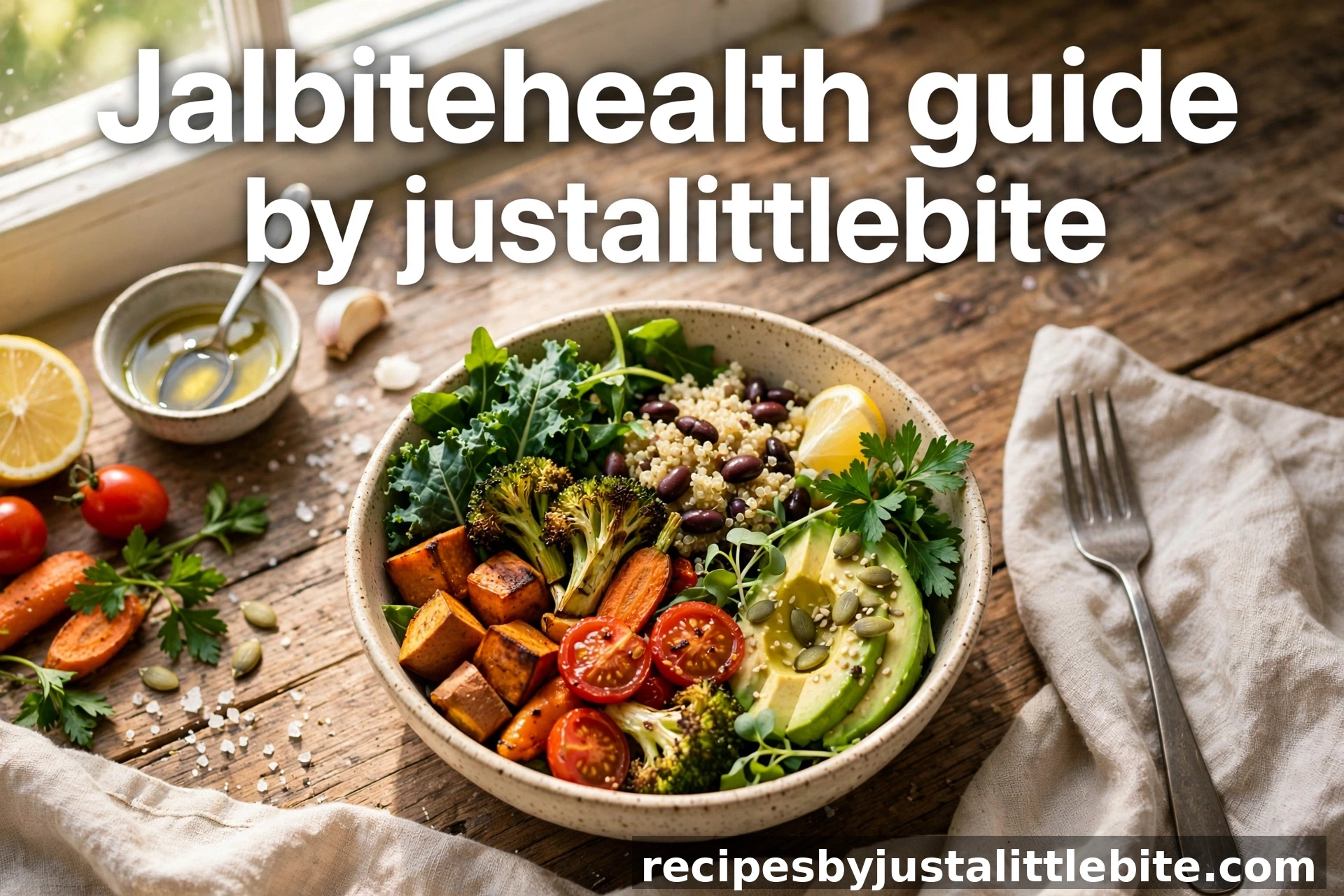
Eating well at home does not need a strict plan or hard-to-find ingredients. Most days, it comes down to a few steady choices: a balanced plate, enough water, regular meals, and food you enjoy. This jalbitehealth guide by justalittlebite explains those basics in plain language, with examples for a normal kitchen and a busy week. No diet plan, and no promises — just practical ideas to try one at a time.
What this guide is — and what it is not
This is general nutrition education for home cooks. It explains widely shared ideas about balanced eating, variety, and portions. It is not individual medical advice, and it is not a substitute for advice from a qualified health professional.
Please note: this guide is general information only, not medical advice. If you have a medical condition, take regular medicine, are pregnant, are feeding a baby, or need advice about your own diet, please speak to a qualified professional, such as your doctor or a registered dietitian, before making changes.
The jalbitehealth advice from justalittlebite here focuses on patterns, not perfection: what you eat most of the time matters more than any single meal.
The basics of balanced eating at home
Balanced eating means a mix of foods across the day, not one type of food again and again. Think variety plus balance: different colours, textures, and food groups over the week. A useful starting point is to build meals around vegetables or salad, add a protein food, add a starchy food for energy, and include a little healthy fat. For a clear general introduction, see the NHS Eat Well guide.
Build a simple plate
- Fill about half the plate with vegetables or salad. Fresh, frozen, or cooked vegetables all count.
- Fill about a quarter with protein, such as beans, lentils, eggs, fish, chicken, yoghurt, or tofu.
- Fill the last quarter with a starchy food, such as rice, bread, pasta, potatoes, or oats.
- Add a little fat for flavour, such as a spoon of oil, a few nuts, or some seeds.
- Drink water with the meal, and keep sweetened drinks occasional.
Soups, stews, and one-pot meals do not fit neatly into quarters, and that is fine. Aim for the same balance inside the pot: plenty of vegetables, a protein source, and a sensible amount of starchy food.
Portions without weighing food
Weighing food every day is tiring, and it is rarely needed at home. As a rough guide for adults, use a palm-sized amount of protein, a fist-sized amount of cooked grains or potatoes, two open handfuls of salad or vegetables, and a thumb-sized amount of oil or spread. Children, older adults, and very active people have different needs. Eat slowly, and pause before a second helping, so you can notice when you have had enough.
Simple habits that support everyday health
Choose one or two ideas, try them for two weeks, then add another if they help.
- Cook at home more often, even if the meal is simple. Home cooking gives you more control over salt, oil, and portion size.
- Keep fruit and vegetables visible and ready to eat, so they are easy to reach.
- Keep water nearby, and save fizzy drinks and sweetened juices for occasional use.
- Use herbs, spices, lemon, garlic, and chilli for flavour, so you can use less salt.
- Eat regular meals where you can, rather than skipping meals and feeling very hungry later.
- Get enough sleep and move during the day where you can.
More everyday ideas are covered by justalittlebite jalbitehealth guides, including meal planning, portion basics, and simple swaps for a home kitchen.
Planning meals for a busy week
Planning saves time and reduces waste, because the decision is made before you are tired and hungry. A loose plan for five evening meals, with two flexible nights, is often enough. Look at what you already have, then choose meals that share ingredients: cooked lentils can become soup one night and a wrap filling the next. Keep two or three very simple meals in reserve, such as beans on toast with salad or pasta with tomato sauce and vegetables.
| Day | Simple example | Time needed |
|---|---|---|
| Monday | Vegetable and bean soup with bread | About 30 minutes |
| Tuesday | Egg and salad wrap with fruit | About 15 minutes |
| Wednesday | Lentil and vegetable stew with rice | About 35 minutes |
| Thursday | Stir-fried vegetables with noodles | About 20 minutes |
| Friday | Baked fish or tofu with potatoes and salad | About 25 minutes |
On a late night, choose a 15-minute meal. On a quieter night, cook a larger batch and freeze half for next week. Seasonal vegetables, frozen vegetables, beans, lentils, eggs, and tinned fish keep costs down while keeping meals varied.
Snacks, drinks and eating out
Snacks are part of everyday eating. Useful ideas include fruit with yoghurt, a small handful of nuts, vegetable sticks with hummus, a boiled egg, or wholemeal toast with peanut butter. For more ideas, see jalbitesnacks best snacks justalittlebite. Sweet snacks, crisps, and cakes can still have a place as occasional foods. Serve a small portion on a plate, rather than eating from the packet.
Water is the simplest everyday drink. When you eat out, look for a meal with vegetables or salad, a protein food, and a starchy food, rather than a meal that is mostly fried food. For everyday meal ideas that work well at home, see healthy food justalittlebite.
Frequently asked questions
Do I need to cut out a whole food group to eat well?
No, not for most people. Balanced eating is about variety and balance across the week. Some people must avoid certain foods for medical reasons or allergies. If that applies to you, get personal advice from a qualified professional.
How much fruit and vegetables should I aim for?
Aim for a good amount each day, with a mix of types and colours across the week. Fresh, frozen, and tinned vegetables can all count. If you eat very little now, adding one extra portion a day is a useful step.
Are frozen vegetables as useful as fresh vegetables?
Yes, in general. They are often frozen soon after picking, last longer, reduce waste, and are ready to cook. Fresh vegetables are also a good choice, especially in season.
What is a simple first change I can make this week?
Choose one change that fits your life: add vegetables to one meal a day, drink water instead of a sweetened drink at lunch, cook one extra meal at home, or plan three evening meals in advance.
Does this guide replace advice from my doctor or dietitian?
No. This guide gives general information for learning and everyday cooking. It does not take your medical history, medicines, allergies, or personal needs into account.
A simple way to start this week
Start with one balanced plate, one planned meal, and one simple swap, and build from there. Keep food you enjoy in your routine, keep portions sensible, and keep planning simple enough to repeat next week. This jalbitehealth guide by justalittlebite is meant to be used, not just read once. Return to the plate idea when you plan meals, and try one new habit at a time. If you want personal advice about your own diet, please speak to a qualified professional.