
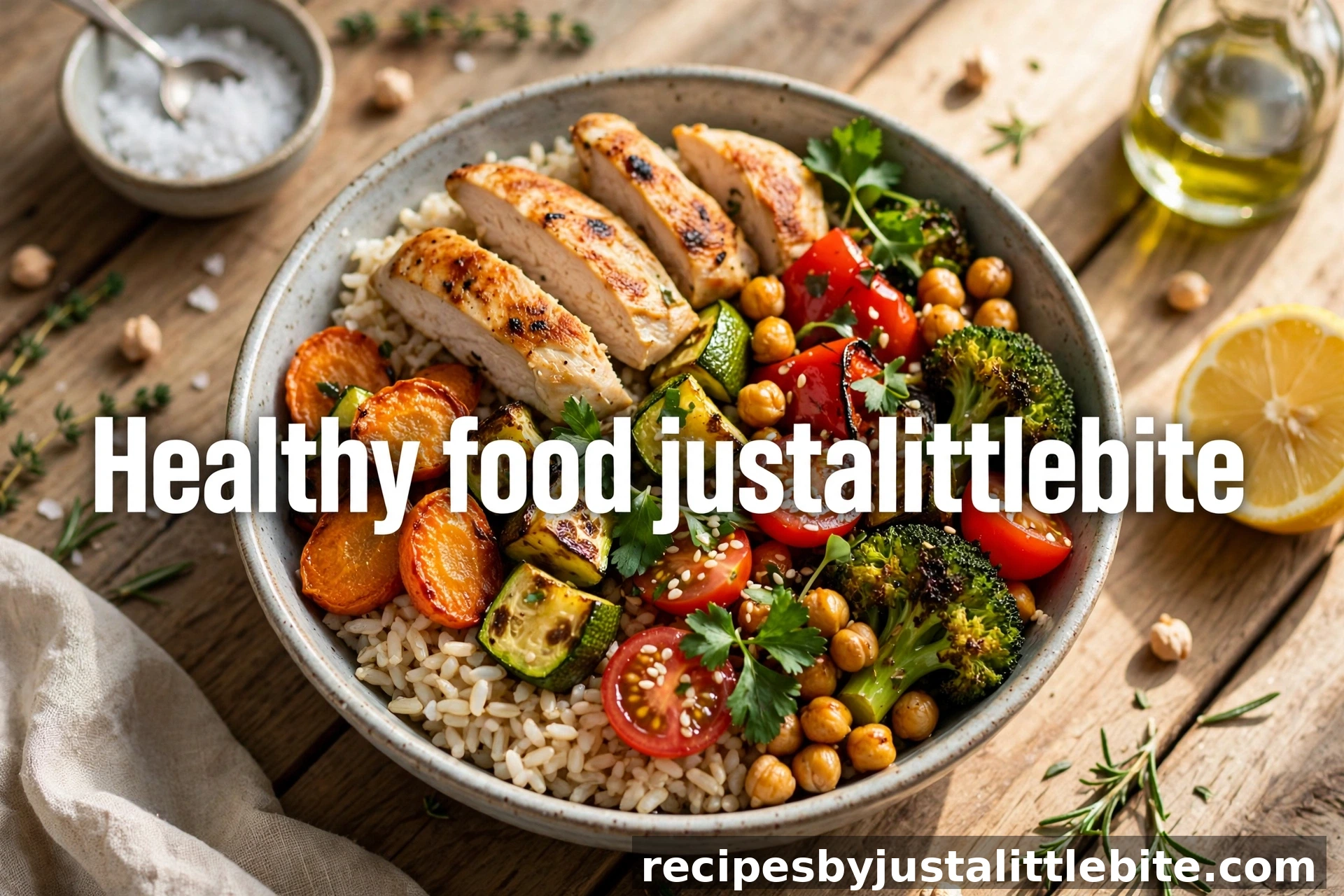
Healthy food justalittlebite
Eating well does not need to be complicated, expensive, or boring. Healthy food justalittlebite is about small, steady choices: a colourful plate, a satisfying portion, and meals you enjoy cooking and eating. This guide explains how to build balanced meals, choose better ingredients, read labels, and plan portions that work for real life.
Start with one change: add one extra vegetable to dinner, or swap one refined grain for a whole grain.
What healthy eating really means
Healthy eating is a pattern, not a single perfect meal. A balanced pattern includes plenty of vegetables and fruit, whole grains, protein foods, and healthy fats, with water as the main drink, and it leaves room for foods you love.
The goal of justalittlebite healthy food is practical guidance for everyday cooking, using a few reliable building blocks and a simple way to put a plate together.
The building blocks of a balanced plate
A useful way to think about a meal is in four parts:
- Vegetables and salad: aim for half the plate, with a mix of colours where you can.
- Protein: a palm-sized portion of beans, lentils, eggs, fish, chicken, tofu, or yoghurt.
- Whole grains or starchy vegetables: a fist-sized portion of brown rice, wholewheat bread, oats, potatoes, or sweet potatoes.
- Healthy fats: a small amount of olive oil, nuts, seeds, or avocado.
Vegetables and fruit: the easy win
Vegetables and fruit add fibre, vitamins, minerals, and flavour for relatively few calories. They also add volume, which helps a meal feel satisfying without needing a very large portion of richer foods.
Include vegetables at every main meal and vary them across the week. Frozen and tinned vegetables count too: frozen peas and spinach are useful when fresh produce is short, and tinned tomatoes and beans are handy staples. Rinse tinned beans to reduce salt.
Fruit is best eaten whole rather than as juice, because whole fruit keeps its fibre. A piece of fruit with yoghurt or a small handful of nuts makes a filling snack. Add grated carrot to pasta sauce, or spinach or peas to rice and omelettes in the last few minutes of cooking.
Whole grains, protein, and healthy fats
Whole grains keep more fibre than refined grains, and fibre helps digestion and helps you feel full for longer. Swap white rice for brown rice, white bread for wholemeal bread, and plain pasta for wholewheat pasta when you can. Oats, barley, bulgur wheat, and quinoa are other useful whole grains for breakfast bowls, salads, and side dishes.
Protein helps build and repair the body, and it helps meals feel satisfying. Good everyday sources include lentils, chickpeas, kidney beans, eggs, yoghurt, cheese, fish, chicken, and tofu. Beans and lentils are affordable, filling, and rich in fibre, so use them several times a week.
Healthy fats are part of a balanced diet too. Olive oil and rapeseed oil are useful for cooking and dressings, while nuts, seeds, and avocado add flavour and texture. Fats are energy-dense, so a small amount goes a long way: a tablespoon of oil for cooking, or a small handful of nuts as a snack, is usually enough.
| Food group | Everyday choices | Why it helps | Easy swap |
|---|---|---|---|
| Vegetables and fruit | Broccoli, carrots, spinach, tomatoes, apples, berries | Fibre, vitamins, and volume | Add one extra vegetable to dinner |
| Whole grains | Brown rice, oats, wholemeal bread, quinoa | Fibre and lasting energy | White rice to brown rice |
| Protein | Lentils, chickpeas, eggs, yoghurt, fish, chicken | Repair, growth, and fullness | Meat-free bean curry once a week |
| Healthy fats | Olive oil, nuts, seeds, avocado | Flavour and essential fats | Butter to olive oil for dressing |
Reading labels without the guesswork
Food labels can feel confusing, but a few checks make them much easier to use. Start with the nutrition table and the ingredients list, and compare similar products side by side rather than judging one product on its own.
Look first at salt, sugar, and saturated fat per 100 grams — lower is usually better for everyday foods, while higher fibre is usually a good sign. Watch serving sizes: a pack may list values for a small serving, while the whole pack contains two or three servings.
The ingredients list is in order of weight, so the first ingredients make up most of the product. If sugar, salt, or refined flour appears near the start, that food is likely high in that ingredient.
For more general, evidence-based guidance on balanced eating, the NHS Eat Well guide is a useful reference: https://www.nhs.uk/live-well/eat-well/
Portion ideas that work in real life
Portion size matters, but you do not need to weigh every meal. Hand measures are a practical guide for most adults: a palm for protein, a fist for grains or starchy vegetables, a cupped hand for fruit, and a thumb for oils and spreads. These measures scale roughly with body size, which makes them useful for different people in the same household.
Here are simple portion ideas for a day:
- Breakfast: a bowl of oats made with milk or water, topped with sliced banana and a tablespoon of seeds.
- Lunch: a wholemeal sandwich or wrap with beans, salad, and yoghurt, plus a piece of fruit.
- Snack: a small handful of nuts with an apple, or carrot sticks with hummus.
- Dinner: half a plate of vegetables, a palm-sized protein portion, and a fist-sized portion of brown rice or potatoes.
Cooking at home makes portions easier to control, because you choose the ingredients and the serving size. A short weekly plan also helps: choose three or four dinners and keep staples such as oats, rice, tinned beans, frozen vegetables, eggs, and olive oil on hand. Justalittlebite healthy foods are easiest to enjoy when they are ready to use, so wash and chop vegetables ahead of time.
FAQs
What is a simple definition of healthy food?
Healthy food is food that gives your body useful nutrients — fibre, protein, vitamins, minerals, and healthy fats — without too much added sugar, salt, or saturated fat. Vegetables, fruit, whole grains, beans, lentils, fish, eggs, nuts, and seeds are good everyday examples.
How can I start eating healthier without a strict diet?
Start with one or two small changes, such as adding a vegetable to every dinner, choosing whole grains, or drinking water instead of a sugary drink. Keep the changes small, repeat them until they feel normal, and then add another one.
Do I need to cut out all snacks to eat healthily?
No. Snacks can be part of a balanced diet. Choose snacks that include fibre or protein, such as fruit with nuts, yoghurt, or vegetable sticks with hummus, and keep portions modest.
Are frozen vegetables as healthy as fresh vegetables?
Yes, in most cases. Frozen vegetables are usually frozen soon after picking, which helps keep their nutrients. They are a practical and affordable way to eat more vegetables, especially when fresh produce is out of season.
Conclusion
Healthy food justalittlebite is not about perfection. Build a balanced plate most of the time, choose whole foods more often, and make meals you enjoy. Add vegetables, choose whole grains, include protein and healthy fats, and keep portions sensible. Start small and stay consistent.
Related guides
- food recipes justalittlebite
- jalbiteblog food trends justalittlebite
- jalbitesnacks best snacks justalittlebite
- jalbitehealth guide by justalittlebite
- quick recipes jalbiteworldfood